

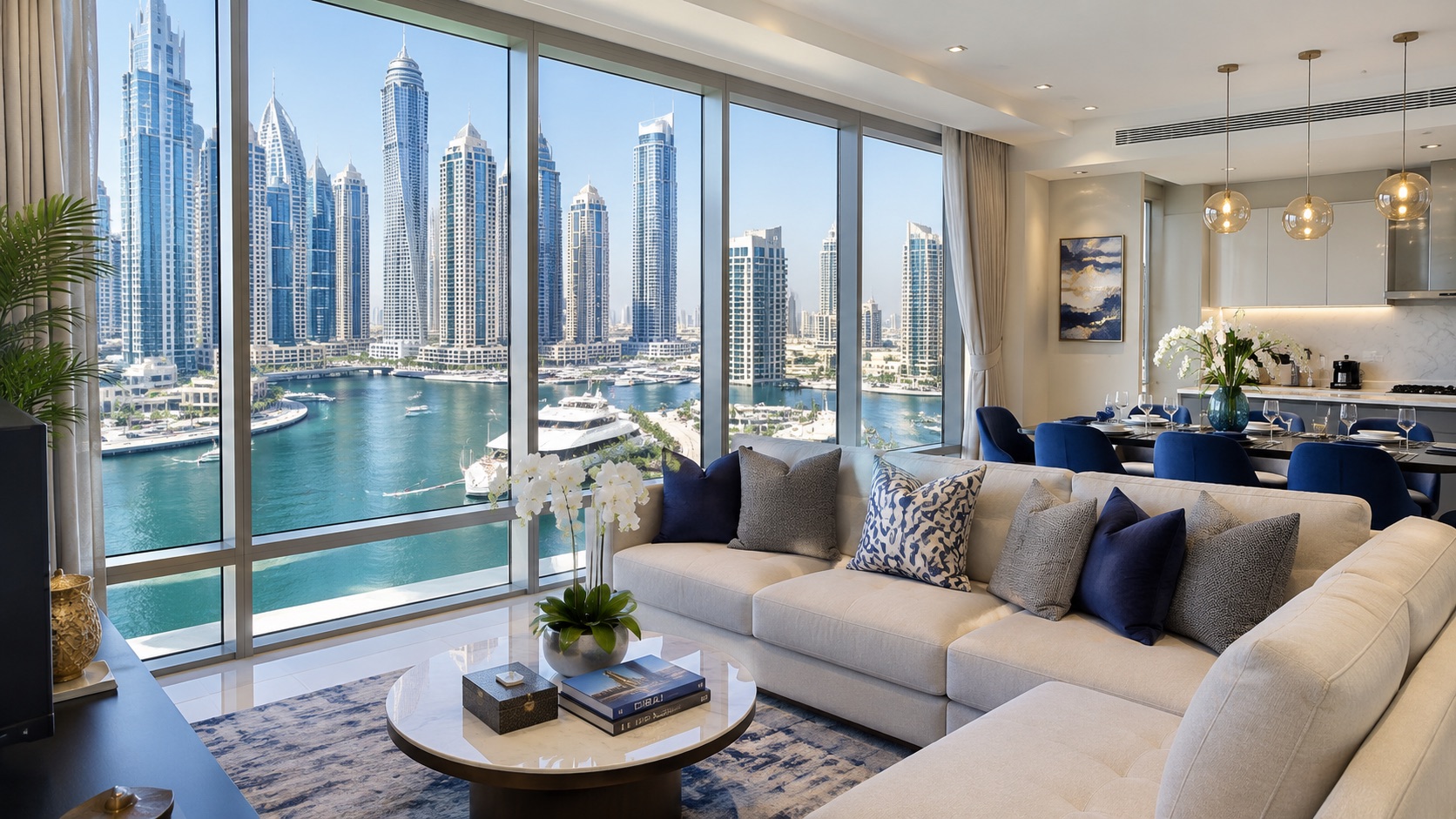
How to Start a Holiday Home Business in Dubai 2026: DET Permit or Risk AED 100,000
Running an Airbnb or short-term rental in Dubai without a DET Holiday Homes permit exposes you to fines up to AED 100,000 and permanent blacklisting from every booking platform. The Department of Economy and Tourism (DET) has completely digitized its compliance monitoring, meaning unlicensed operators are identified faster than ever before. If you are planning to launch a holiday home business Dubai 2026, understanding the legal framework is no longer optional, it is a critical survival requirement. The short-term rental market offers incredible yields, but the Dubai government now strictly enforces regulations to maintain the city’s premium hospitality standards. Ignorance of the law will not protect you from severe financial penalties or from having your property listings forcefully removed by platforms like Airbnb and Booking.com, which now share host data directly with DET.
Quick Answer: To start a holiday home business in Dubai 2026, you must secure a DET Holiday Homes permit. Individual owners can manage up to 8 units without a DED license, while operators need a commercial permit. Costs start at AED 1,520 annually, plus mandatory SIRA smart locks and Tourism Dirham fees.
Is Airbnb Legal in Dubai 2026?
Yes, Airbnb and other short-term rental platforms are completely legal in Dubai, provided you operate under the strict guidelines established by the Department of Economy and Tourism. Dubai Tourism actively regulates the short-term rental sector to ensure visitor safety, quality assurance, and fair market competition. In 2026, the integration between booking platforms and government databases is seamless. When a guest books your property, the platform automatically reports the reservation to DET. If your property does not have a valid holiday home permit attached to your host profile, your listing will be suspended immediately. To run a compliant holiday home business Dubai 2026, you must treat your rental as a regulated hospitality enterprise rather than an informal side hustle. The authorities have made it clear that unregulated subletting will not be tolerated, protecting both the real estate market and the emirate’s global tourism reputation.
Individual Owner vs Operator: Which Path to Choose?
When establishing your holiday home business Dubai 2026, you must choose between registering as an individual owner or a licensed operator. The correct path depends entirely on whether you own the property and how many units you intend to manage.
Individual Owner: If you own the property you wish to rent out on a short-term basis, you can apply directly for a DET Holiday Home permit. Under the current regulations, an individual owner can manage up to 8 units without needing a separate Department of Economic Development (DED) business permit. This route is highly popular among real estate investors who purchase apartments and villas specifically for short-term yields. The application process is straightforward, as you are dealing directly with your own assets.
Operator: If you intend to manage properties owned by other investors, you are classified as an operator. This requires a DED commercial permit, which typically costs between AED 10,000 and AED 15,000 per year, depending on your legal structure. As a licensed operator, you act as a management company, taking a percentage of the rental income in exchange for handling guest communications, cleaning, maintenance, and government compliance. Yalah Dubai frequently assists entrepreneurs in setting up this commercial structure, ensuring they have the legal framework to scale their portfolio aggressively without crossing legal boundaries.
5-Step DET Permit Application Process
Securing your DET permit requires careful attention to detail. The entire process is managed online through the Dubai Tourism portal. Follow these five steps to get your holiday home business Dubai 2026 legally operational.
- Create a DET Account: Register on the Department of Economy and Tourism portal as a new user. You will need to provide your email address, passport details, and Emirates ID to set up your profile.
- Submit Property Details: Enter the exact location, address, and property type. You must specify whether the unit is an apartment, studio, villa, or townhouse. The system will prompt you to declare ownership status.
- Upload Required Documents: Attach your title deed, passport copy, Emirates ID, floor plan, photos, and the NOC from building management. Ensure all documents are clear and properly formatted to avoid rejection.
- Install SIRA Smart Lock: Before DET issues the permit, you must install a SIRA-approved smart lock. Upload the installation certificate and smart lock serial number to your application dashboard.
- Pay Fees and Pass Inspection: Pay the annual permit fee based on your property type. DET will then schedule a virtual or physical inspection to ensure the unit meets safety and quality standards before issuing your final permit.
Holiday Home Permit Cost Breakdown
Budgeting for your holiday home business Dubai 2026 requires an understanding of the mandatory government fees. The DET charges different rates depending on the classification of your property. These fees are renewable annually and must be paid on time to avoid late penalties.
| Property Type | Annual DET Permit Fee | Additional Fees |
|---|---|---|
| Studio or Apartment | AED 1,520 per year | Knowledge and Innovation fees extra |
| Villa or Townhouse | AED 3,570 per year | Knowledge and Innovation fees extra |
Beyond the base DET fees, you must also account for the Knowledge and Innovation Dirham, which is a standard government charge applied to all transactions in Dubai. Factor in the cost of professional photography, interior staging, and your SIRA smart lock hardware when calculating your initial capital expenditure.
Required Documents Checklist
Preparation is the key to a fast approval process. Missing or incorrect documents are the primary reason permit applications are delayed. Ensure you have the following items ready before starting your online application.
- Title Deed: A clear copy of the current property title deed proving your ownership or right to lease.
- Passport: A scanned copy of your passport, including the signature page.
- Emirates ID: A copy of your valid Emirates ID, front and back.
- Floor Plan: An architectural floor plan of the unit, clearly showing the layout and emergency exits.
- Photos: High-resolution photos of every room, the kitchen, bathrooms, and the exterior of the building.
- NOC from Building Management: A No Objection Certificate from the building management or owners association explicitly permitting short-term holiday rentals in the building.
SIRA Smart Lock Mandatory Requirement
Since 2025, the Dubai government has mandated that all short-term rental properties install a SIRA-approved smart lock system. The Security Industry Regulatory Agency (SIRA) oversees physical security standards in the emirate, and this requirement is strictly enforced by DET. You cannot receive a holiday home permit without proof of this installation.
These smart locks cost between AED 800 and AED 1,500 per unit, including hardware and installation. The purpose of the SIRA smart lock is to ensure secure, trackable access for guests while preventing unauthorized key duplication. The locks integrate directly with the Dubai Police and DET systems, allowing authorities to monitor occupancy in real time. For your holiday home business Dubai 2026, this is a non-negotiable security investment. Yalah Dubai advises clients to hire certified SIRA technicians to handle the installation, as self-installed or unapproved locks will be immediately rejected during the DET inspection phase.
Ongoing Operational Obligations
Obtaining the permit is only the first phase of your compliance journey. Operating a holiday home business Dubai 2026 requires strict adherence to ongoing financial and administrative duties. Failure to manage these obligations will result in immediate permit revocation.
| Obligation | Details | Deadline |
|---|---|---|
| Tourism Dirham Fee | AED 10 per night for Standard or AED 15 per night for Deluxe, calculated per bedroom | Filed monthly |
| VAT Registration | Mandatory once annual revenue exceeds the AED 375,000 threshold | Threshold applies immediately upon reaching the limit |
| ICA Guest Registration | All guest passport details must be submitted to the Federal Authority for Identity and Citizenship | Within 24 hours of guest check-in |
| Monthly Tourism Dirham Filing | Submit occupancy returns and pay accrued fees to DET | By the 15th of each month |
The ICA guest registration within 24 hours is a critical security measure. If a guest arrives and you fail to upload their details to the ICA portal before the deadline, you face heavy fines. Many operators use automated channel manager software to sync guest data directly to government portals, reducing the risk of human error.
Penalties for Unlicensed Holiday Homes
The risks of operating illegally far outweigh the cost of obtaining a permit. DET conducts routine audits and cross-references platform listings with their internal database of licensed properties. If you are caught running an unlicensed holiday home business Dubai 2026, the financial consequences are severe and escalate rapidly.
| Offence Level | Penalty |
|---|---|
| First offence | AED 5,000 fine and immediate listing suspension |
| Repeat offence | AED 10,000 to AED 50,000 fine depending on the frequency of violations |
| Persistent violation | AED 100,000 fine plus permanent ban from operating any holiday home in Dubai |
A permanent ban means you will be blacklisted across all booking platforms, effectively ending your ability to generate short-term rental income in the UAE. Furthermore, repeat offenders may face legal action from building management for breaching standard residential lease terms.
ROI Comparison: Short-Term vs Long-Term Rentals
Despite the strict regulations and initial setup costs, the financial rewards of a holiday home business Dubai 2026 are unparalleled. Short-term rentals (STR) consistently outperform long-term rentals (LTR) in the Dubai real estate market. On average, STR properties yield an annual return on investment (ROI) of 8% to 12%, whereas traditional LTR properties typically yield between 5% and 7%.
One of the most significant advantages of Dubai’s regulatory framework is the absence of a night cap. Unlike heavily restricted global markets such as London, which limits short-term rentals to 90 days per year, or Sydney, which imposes a 180-day cap, Dubai allows you to rent your property 365 days a year, provided there are guests. This unrestricted earning potential allows investors to maximize their occupancy rates.
Furthermore, the UAE offers an incredibly favorable tax environment. There is no personal income tax on rental yields, meaning 100% of your net profit goes directly into your pocket. There is also no capital gains tax when you eventually sell the property. This tax-free, high-yield environment is exactly why international investors are rushing to establish their holiday home portfolios in Dubai before the market becomes saturated.
Frequently Asked Questions
How much does a holiday home permit cost in Dubai?
The cost of a DET holiday home permit in Dubai depends on your property type. For a studio or apartment, the annual fee is AED 1,520. For a villa or townhouse, the annual fee is AED 3,570. You must also factor in the cost of a SIRA-approved smart lock, which ranges from AED 800 to AED 1,500, plus standard Knowledge and Innovation fees.
Can I run an Airbnb without a permit in Dubai?
No, running an Airbnb without a permit is strictly illegal and heavily penalized. The Department of Economy and Tourism monitors all booking platforms. If you list a property without a valid permit, you will be fined AED 5,000 for a first offence, up to AED 50,000 for repeat offences, and AED 100,000 with a permanent ban for persistent violations.
How many properties can an individual owner manage in Dubai?
An individual owner can manage up to 8 units under their own name without needing a commercial DED business permit. This regulation allows private investors to build a substantial portfolio of short-term rentals using only their personal DET Holiday Home permits. If you wish to manage properties owned by others, you must apply for an operator license.
What is a SIRA approved smart lock?
A SIRA approved smart lock is a security device certified by the Security Industry Regulatory Agency in Dubai. It provides secure, keyless entry for guests and integrates directly with government security databases. Since 2025, installing one of these locks is mandatory for all holiday homes, and no DET permit will be issued without a valid installation certificate.
How much is the Tourism Dirham fee in Dubai?
The Tourism Dirham fee is a mandatory nightly tax levied on guests staying in holiday homes. The fee is AED 10 per night for Standard classified properties and AED 15 per night for Deluxe classified properties. This fee is calculated per bedroom and must be collected from the guest and remitted to DET by the 15th of every month.
Is short-term rental profitable in Dubai?
Yes, short-term rentals are highly profitable in Dubai. Investors typically see an ROI of 8% to 12%, which is significantly higher than the 5% to 7% ROI offered by long-term rentals. With no night caps on rentals, no personal income tax, and no capital gains tax, Dubai offers one of the most lucrative short-term rental markets in the world.
How long does it take to get a DET holiday home permit?
Provided all your documents are in order and your SIRA smart lock is installed, the DET permit application process typically takes between 5 to 10 working days. This timeline includes the submission of documents, fee payment, and the final property inspection conducted by the Department of Economy and Tourism.
Do I need a DED license for Airbnb in Dubai?
If you are renting out a property you own, you do not need a DED license, as the DET Holiday Home permit is sufficient for up to 8 units. However, if you are managing properties on behalf of other owners, you are acting as a commercial operator and must obtain a DED commercial permit, which costs between AED 10,000 and AED 15,000 annually.
Start Your Holiday Home Business with Yalah Dubai
Navigating the regulatory landscape of Dubai’s real estate market requires precision and local expertise. From securing your NOC to installing your SIRA smart lock and filing your monthly Tourism Dirhams, the compliance requirements are rigorous. Yalah Dubai’s PRO and business setup team can guide you through the complete DET permit application. Contact us at https://yalahdubai.com/contact-yalah-dubai/ or WhatsApp +971525802100.
Related Reading
- Dubai Mainland Company Setup Cost 2026
- UAE Family Visa 2026 Dubai Guide
- Good Conduct Certificate UAE 2026
Related: Running a business in Dubai? Learn about UAE corporate tax filing deadline 2026 and avoid AED 500/month penalties.
Related Guides
- How to Change the Profession on Your UAE Residence Visa, Work Permit and Emirates ID in 2026: MOHRE and ICP Steps, Documents and Fees
- Dubai Rental Dispute Centre 2026: How Tenants and Landlords File a Case, Official Fees, Documents and Timeline
- Amending Your Dubai Business Licence in 2026: How to Add Activities, Change Partners, Managers or Your Company Name
- Mobile SIM Card Registration for New UAE Residents 2026: Etisalat vs du, Emirates ID Rules and the Visa-Pending Workaround
One Response